Dr. Elizabeth Gould Bell
Elizabeth was one of five children born to Margaret Smith, a farmer’s daughter, and Joseph Bell, the clerk of the Newry workhouse. Elizabeth was born on Christmas Eve 1862 but the first twenty years of her life are little documented.
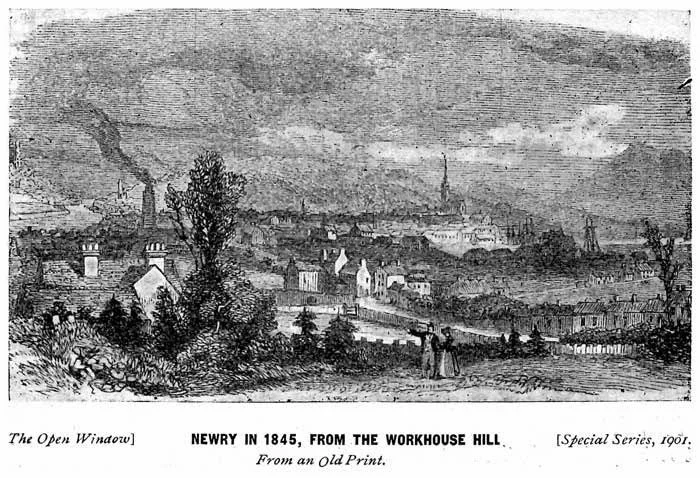
Print of Newry in 1845
In 1888 Elizabeth and younger sister Margaret enrolled in Queen’s College and completed one year’s study in the faculty of arts. Why only one year? The Bell sisters actually wanted to study medicine but Queen’s did not accept women into medicine until 1889. Campaigners had been petitioning Queen’s College to accept female students for degrees for years but the administration was reluctant, eventually agreeing to staged acceptance. Arts was considered a more feminine-friendly subject area so it opened first in 1882, followed by science in 1886. Medicine was the last faculty to open to female students in 1889. The sisters switched to medicine and made up two-fifths of the first female intake. They studied the same curriculum as the male students and attended the General Hospital on Frederick Street and the Union Hospital on the Lisburn Road.
Three of the five women decided to specialise and receive diplomas from licensing bodies instead of the full medical degree. Only Elizabeth and Henrietta Rose Neill completed the full degree and graduated MB BCh BAO in 1893.
After becoming one of the first women to graduate in medicine from Queen’s College, Elizabeth then became a member of the British Medical Association and the Ulster Medical Society. She published her first paper in 1895 on ‘A Curious Condition of Placenta and Membranes’.
She later became Medical Officer to Riddel Hall, the only residence for female students of Queen’s University and went on to act as a Governor of the institution.
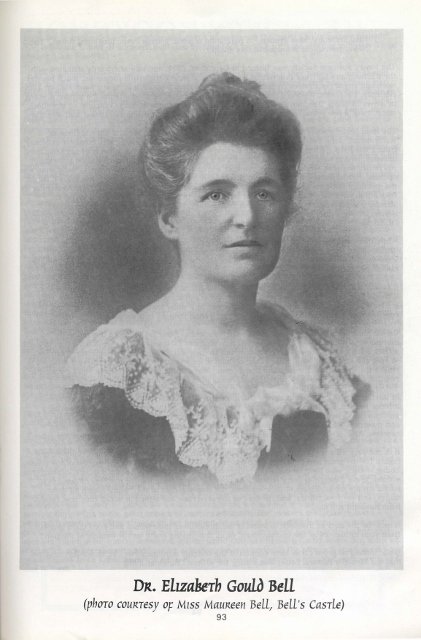
Early photograph of Elizabeth Gould Bell
A year later, Elizabeth married Dr Hugh Fisher. Both had been studying at Queen’s at the same time and both worked as GPs with separate practices in Great Victoria Street. In 1898 they had a son, Hugh Bell Fisher known as Hugo.
Dr Hugh Fisher contracted typhoid in 1901 and died.
As a lady doctor, Elizabeth’s work focused on women and children which was considered more appropriate.
She became medical officer to the Malone Place Hospital which had begun as a charity for women and by the 20th century had added maternity care for unmarried mothers.
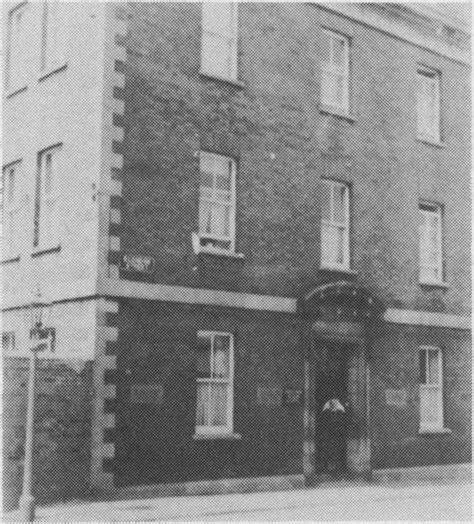
Belfast Midnight Mission started in 1860 and by 1900 had set aside one room for unmarried pregnant women
Elizabeth also had an interest in the health of babies and children in the unhealthy city of Belfast. Perhaps because of her work in public health, Elizabeth also realised the importance of suffrage.
In 1911 Elizabeth took part in a suffragette demonstration in London, throwing stones through a department store window. She was arrested and imprisoned in Holloway Women’s Prison along with another Belfast suffragette Margaret Robinson. On her return to Belfast, she apparently kept on the right side of the law as there is no evidence that she participated in any of the local suffrage illegal activities. That doesn’t mean she had set aside her suffragette colours.
Dr. Elizabeth Gould Bell
The Belfast branch of the Women’s Social & Political Union was established in 1913, the same year the British government introduced a piece of legislation to deal with suffragettes on hunger strike. The Prisoners Temporary Discharge for Ill-Health Act (also known as the Cat and Mouse Act) was designed to let prisons release hunger striking suffragettes when they became ill and then re-imprison them once they recovered.
Elizabeth acted as the doctor for the suffragette prisoners in Crumlin Road Jail. She continued to agitate for suffrage and addressed meetings in the Ulster Hall. At one she claimed:
“The vote would enable women to remedy a lot of conditions that they wanted to alter, and they could co-operate much better with men if they were standing on an equal political platform.”
In 1916 women on the Medical Register were asked if they would be willing to serve with the Royal Army Medical Corps to aid the British forces in the Great War. Elizabeth was in the first group of women to answer this call and was sent to Malta in August 1916. She served for 12 months as a Civilian Surgeon, a lesser rank than her male counterparts but crucially on the same level of pay.
Only a few months after her return to Belfast, Elizabeth received word that her son Hugo had been killed in Belgium. Like both his parents, he had been studying medicine at Queen’s University when war broke out. He was 20 years old when he died.
Elizabeth remained in Belfast for the rest of her life, working as a GP until forced to retire through illness. She died on 9 July 1934 at her home in College Gardens. She was 71 years old.
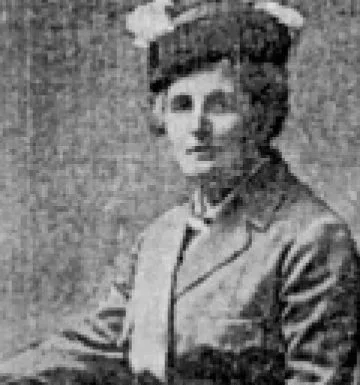
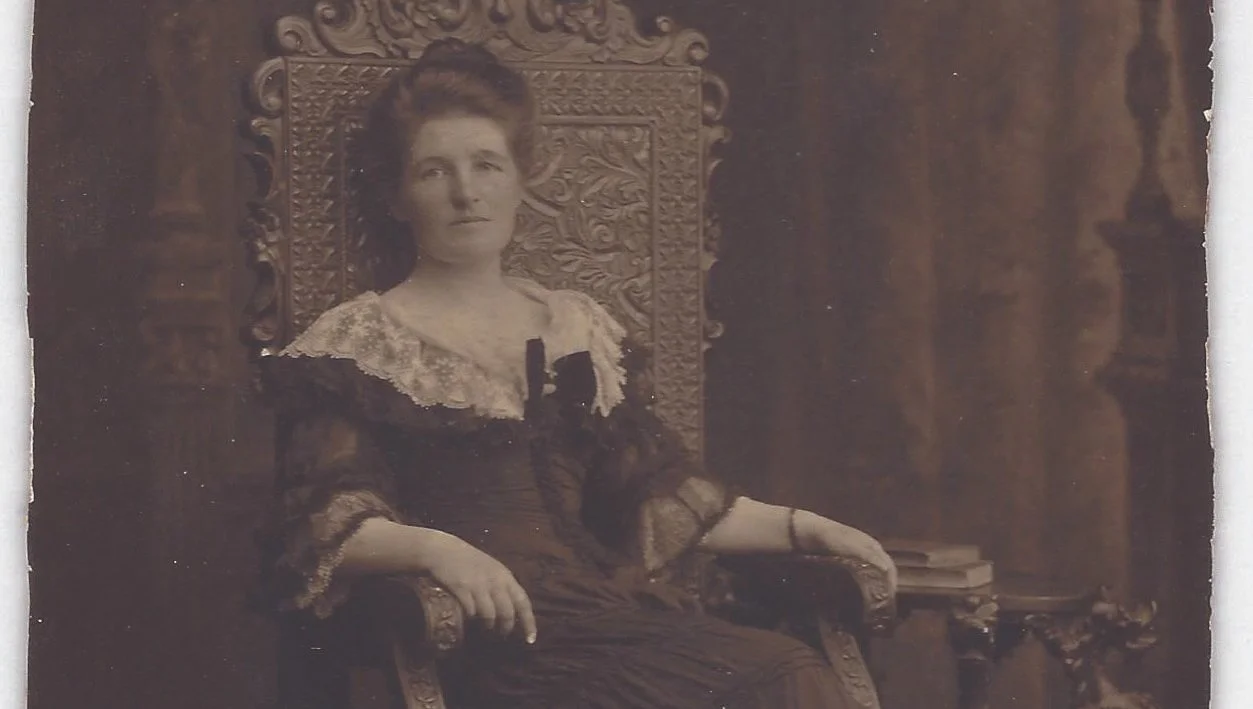
Later photograph of Dr. Elizabeth Gould Bell
In 2016 a blue plaque was installed to mark the legacy of Dr. Elizabeth Gould Bell. Although most of her working life was spent in Belfast, the plaque was erected at Daisy Hill Hospital in Newry, the workplace of her father.
Further Reading
Shelagh-Mary Rea, “Dr Elizabeth Gould Bell (1862 - 1934) - The First Woman to Graduate in Medicine and Practice in Ulster” in Ulster Medical Journal (2017)