Prostitution in Nineteenth-Century Belfast
Prostitution was rife across Ireland in the nineteenth century. Although not quite the world’s “oldest profession”, there has always been a strong correlation between cash societies and sex work. Looking at how a society treated prostitution can tell us a lot about how that society thinks about women, sexual activity, poverty, class and gender.
Sex work was a way for women to earn small amounts of money. It existed throughout Ireland but was particularly concentrated in urban areas. In towns and cities, economic changes could happen swiftly and unexpectedly like losing employment, catching an infectious disease or being abandoned. However, women could also turn to sex work in order to top up the low wages they received from other kinds of employment.
Some urban areas sought to contain sex work with a practice known as zoning. In Dublin, the Mecklenburgh area, known as Monto district, was well known as the area where sex could be bought. In many towns and cities, certain areas gained a reputation for housing prostitution. Belfast was no different.
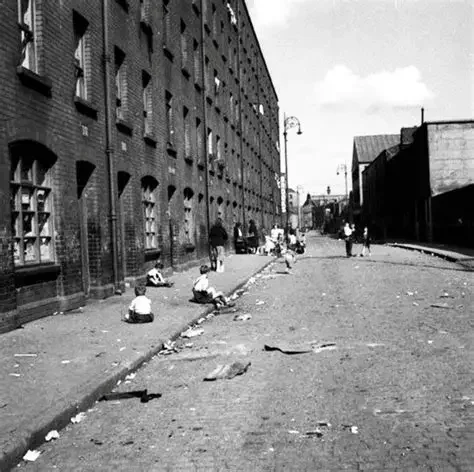
Monto District, Dublin
Belfast’s issues with prostitution were becoming known at the end of the 18th century in the area of the town where the military barracks was located. The Poorhouse of Belfast even admitted some women involved in sex work around the turn of the century. While they provided these women with bed and board, they also had to make a distinction between them and the “deserving poor” so these women were confined and put on a restricted diet.
Most of our information about sex workers in the nineteenth century comes from reformers, do gooders, who were gathering information in order to restore “fallen women”. They rarely seemed to suspect that sex work was a means of earning, instead leaning into narratives of women who had been seduced into this life or were morally corrupt.
William Logan, a Scottish mission worker, visited Ireland in the 1840s and reported on prostitution.
William Logan, The Great Social Evil 1871 (Wellcome Library)
“When in Dublin in 1842, I visited, in company with the Rev. William Robertson, Superintendent of the City Mission, a number of the more depraved parts of the Irish metropolis. In a back street in the neighbourhood of the Barracks, there were, it was said, some 200 of these wretched girls, and over the door of one of the dens I observed the words “old hell” regularly painted as the sign. Mr. Robertson informed me that from information which could be relied on, there were about 1700 prostitutes in Dublin.”
In Belfast, the Rev. Anthony McIntyre kept a diary of his visits to the poor parts of the town as part of his work for the Unitarian Domestic Mission to the Poor of Belfast. In September 1853 he noted that off North Street in Smithfield:
“We entered several of the worst houses in this place, houses full of unfortunate females.”
McIntyre recorded that after speaking to them of God and their conscience, “One girl said she would rather than the world that she could get out of that line of life.”
But how big a problem was it in Belfast?
For some kind of answer, we have to turn to another minister, the Presbyterian Rev. Dr. John Edgar. Edgar was a man of many causes, including Famine relief, promoting the Irish language, the education of the deaf, dumb and blind and his most famous involvement in the temperance movement.
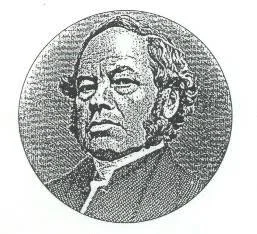
Rev. John Edgar
In 1841 Edgar decided to visit all the brothels in Belfast and count the sex workers.
I cannot stress this enough - no one asked him to do this.
With the aid of two police constables, he counted 236 sex workers living in 59 brothels. He used this statistic when promoting rescue work within Ireland and Britain.
Outside of Edgar’s census, we know that from 1867 Belfast had high arrest rates for prostitution. In order to try and cleanse the reputation of certain parts of Belfast, some streets were renamed. Anderson’s Row, a notorious sex work hotspot, was renamed Millfield Place in December 1860.
Historian Maria Luddy has summed up why there was so much prostitution in Belfast.
“The fact that prostitution was relatively common in industrial Belfast suggests that many women were either unable to support themselves on industrial wages, wanted more in terms of wages or were without employment.”
While there were employment opportunities for women in Belfast, they did not necessarily mean they had economic independence. The establishment of several organisations and institutions over the course of the nineteenth century in Belfast shows how much of an issue sex work was.
Further articles will explore these organisations, some of which are included on my walking tour Trailblazing Women of Belfast. For more on prostitution in Ireland and attitudes to female sexuality, check out the further reading suggestions below.
Further Reading:
Maria Luddy, Prostitution and Irish Society 1800 – 1940 (Cambridge, 2007)
Maria Luddy, ‘Women of the Pave’ in History Ireland (2008)
Dymphna McLoughlin, ‘Women & Sexuality in nineteenth-century Ireland’ in The Irish Journal of Psychology (1994)